STAR Resources
Our biggest resource is our trainings. See the schedule for upcoming training.
Printable STAR Models
- The Snail Model: Breaking the Cycles of Violence (pdf)
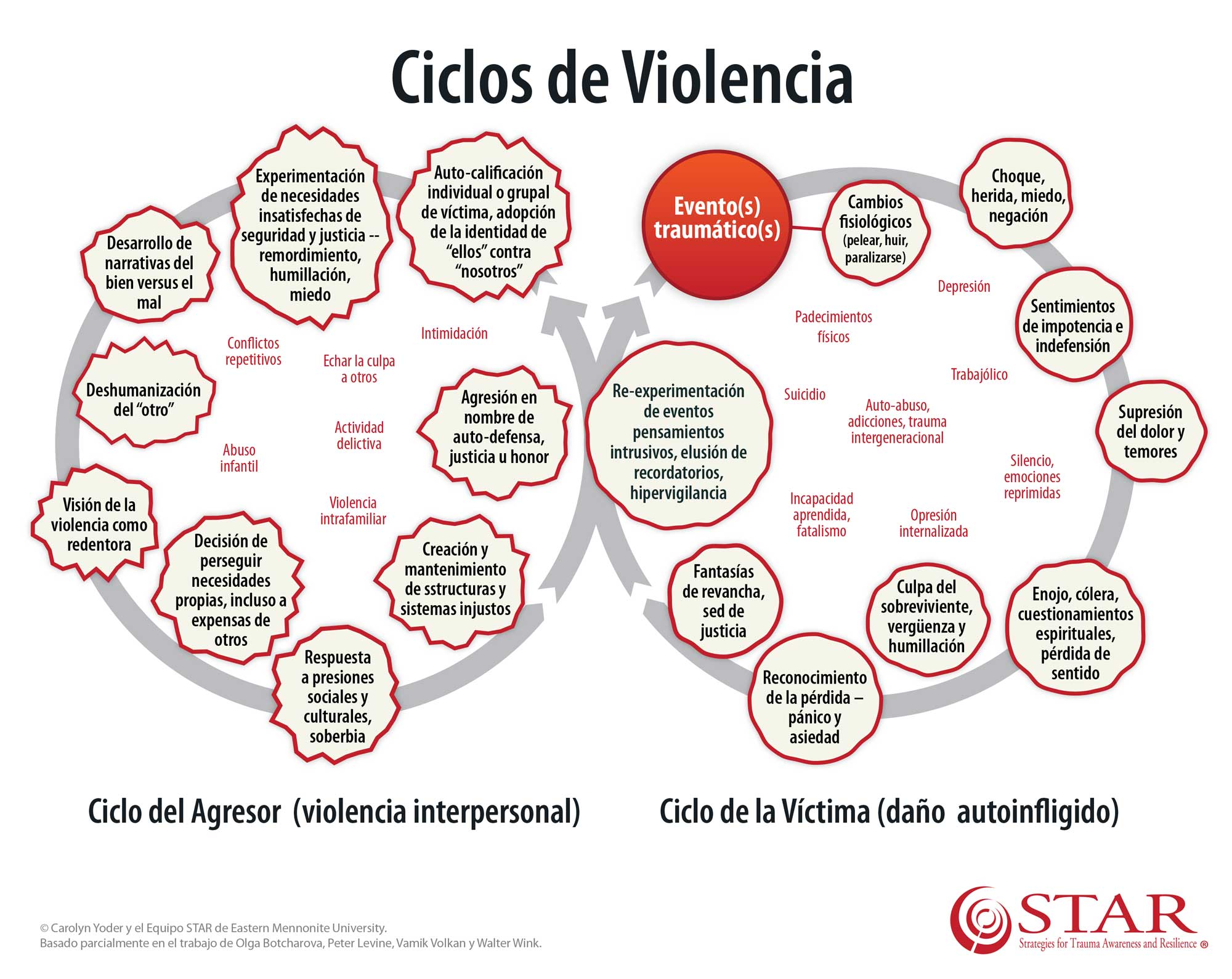
- Rompiendo Ciclos de Violencia Español (jpg)
- Briser les cycles de la violence Accroître la résilience (pdf)
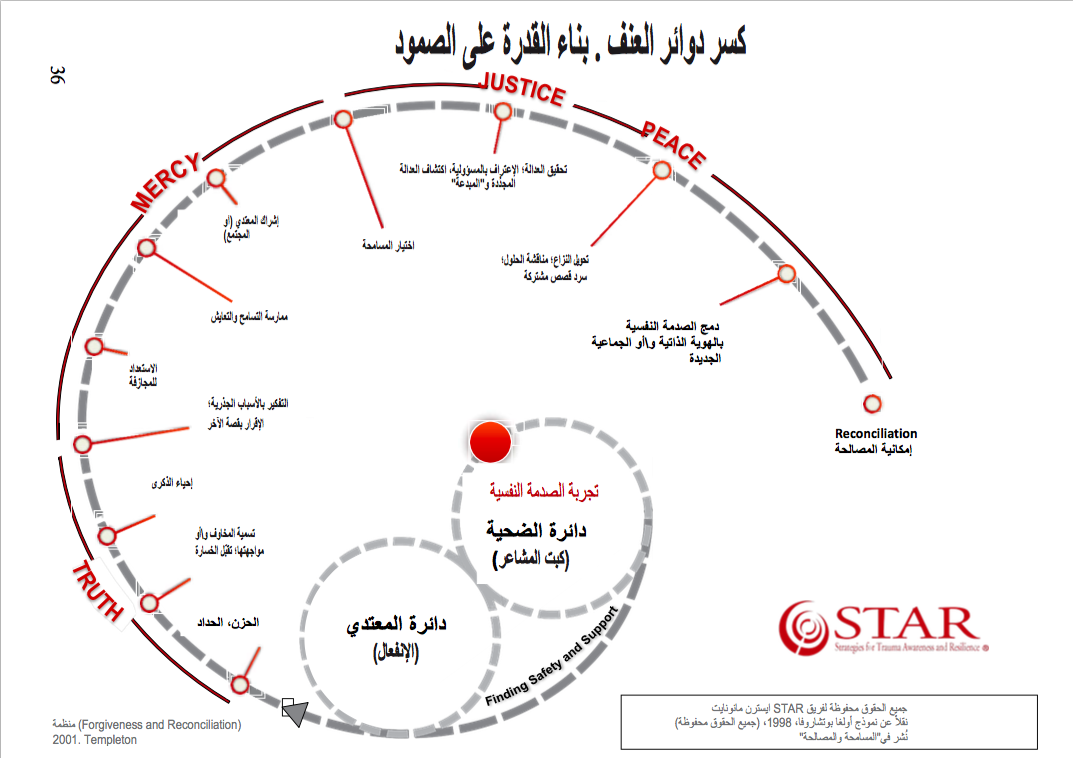
- ﻛﺴﺮ دواﺋﺮ اﻟﻌﻨﻒ . ﺑﻨﺎء اﻟﻘﺪرة ﻋﻠﻰ اﻟﺼﻤﻮد (png)
- Quebrando os Ciclos da Violência Construindo Resiliência
- The Cycles of Violence (pdf)
- Ciclos de Violencia Español (jpg)
- Les cycles de la violence (pdf)
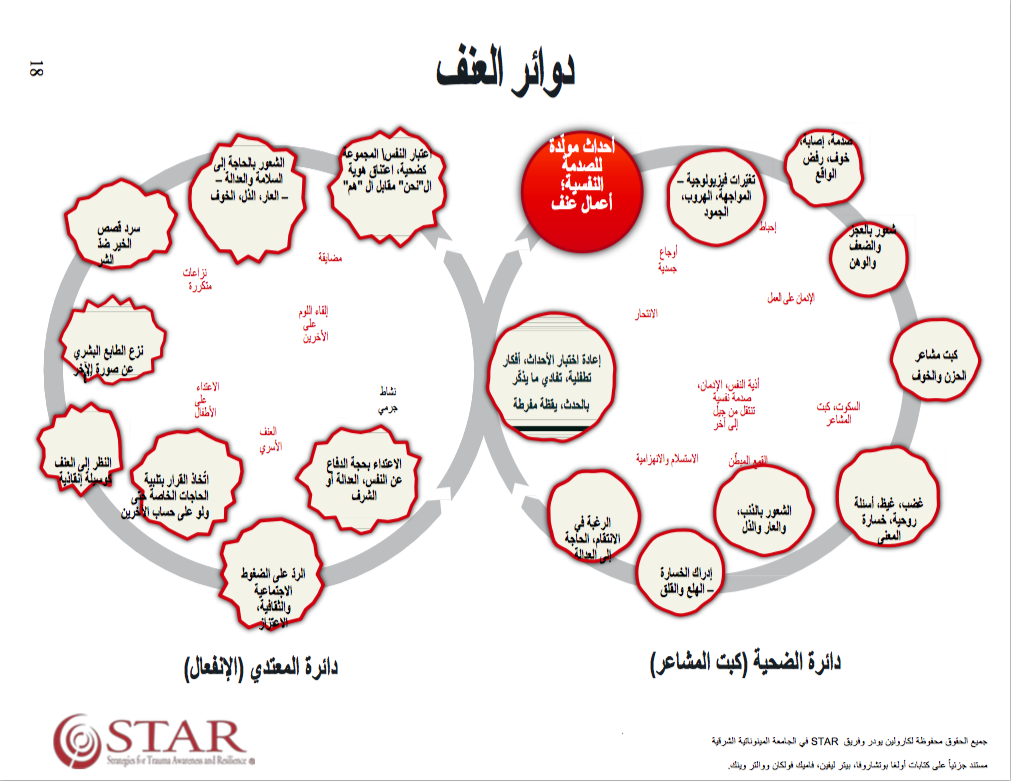
- دواﺋر اﻟﻌﻧف (png)
- Ciclos da Violencia (pdf)
STAR Handouts
- Trauma-sensitive development & aid article (pdf)
- Trauma Do’s and Dont’s (pdf)
- What Trauma Does to the Brain and Body (pdf)
- Common Responses to Stress and Trauma (pdf)
- Des réponses communes aux hauts niveaux de stress et / ou traumatisme (pdf)
- What You Can Do to Take Care of Yourself (pdf)
- Ce que vous pouvez faire pour prendre soin de vous même (pdf)
- What does it mean to be trauma informed and resilience oriented? (pdf)
Resources about Gender-based Violence and Trauma
- STAR for Sexual Harms
- Women in Peacebuilding: Resource and Training Manual
- Excerpts from Family STAR (Contact star@emu.edu to purchase the entire Family STAR)
Resources about Historical Harms and Trauma
Articles about STAR
- Dickey, Angela K. "Long Past Time to Talk about Trauma- Raising Awareness and Resilience"
- Schick, Katie. "Acting out and working through: trauma (and insecurity)" in Review of International Studies, Vol 37, No 24 (October 2011). Pages 1837-1855. (Available through JSTOR)
- Mansfield, Kathryn. "Strategies for Trauma Awareness and Resilience programme: experiential education towards resilience and trauma informed people and practice"
STAR Books
- The Little Book of Trauma Healing by Carolyn Yoder – An overview of invidual and collective trauma, common responses to trauma, and how to break the cycles of unhealed, unaddressed trauma. For everyone who works with trauma, whether the everyday variety, or with those affected by terrorism, tsunamis, current conflicts or historical wounds.
- STAR the Unfolding Story – a free e-book about the first ten years of STAR’s journey.
- STAR on Peacebuilder Online – Blog posts and articles related to the STAR program
Follow STAR on Facebook
Strategies for Trauma Awareness and Resilience