SPI Instructors
-
Catherine Barnes
Facilitating Conflict Transformation: Working with Fire - PAX 684
Dr. Catherine Barnes has worked for conflict transformation and social justice for more

than thirty years. She is an affiliate faculty member of the Center for Justice and
Peacebuilding at Eastern Mennonite University and a freelance facilitator, trainer and researcher. Catherine has extensive experience facilitating conversations on
challenging topics, in locations ranging from the UN General Assembly Hall to village gathering places. She is increasingly focused on designing whole-of-system deliberative dialogue processes and training other practitioners in these skills. She delights in holding spaces where each person can feel valued, find connection, and experience
rooting and shifting into change.
Examples of recent processes she has helped to design and facilitate range from
workshops for the Afghan High Peace Council, the Mennonite Church USA’s Future
Church Summit, a sustained public dialogue for ‘culture war’ conflict in a Virginia public
school system, support to advocacy coalitions to re-discover their dynamism and
purpose, and ongoing bridge building and community dialogue for racial healing in her
home town in Virginia’s Shenandoah Valley. She finds that underlying process design
principles can span these widely divergent contexts.
As teacher, trainer, researcher, policy advocate and consultant, she has worked with
civil society activists, diplomats and politicians, and armed groups in more than 30
countries to support their capacities for preventing violence and using conflict as an
opportunity for addressing the underlying systems giving rise to grievance.She has written widely on peace processes, civil society roles in peacebuilding, and on
issues related to statebuilding, conflict prevention, genocide and minority rights. She is
currently collaborating on a project with University of Notre Dame's Peacetech and
Polarization Labworking to develop a Handbook on Deliberative Tech and Process
Design. She is also writing a book entitled: Ending Our Addiction to Coercion:
Understanding Conflict Habituated Systems and How to Transform Them.
Catherine holds a doctorate in Conflict Analysis and Resolution from George Mason
University. A freelancer now (www.catherinebarnes.space), she has worked with
numerous peacebuilding and human rights organizations, including Conciliation
Resources and Minority Rights Group International.
She now lives in Staunton Virginia with her husband and son, and extended family and
friends, with whom she loves to garden, to cook, to make music and to retreat into the
wilds of the surrounding mountains. -
Ram Bhagat
 Strategies for Trauma Awareness and Resilience (STAR), Level 2 - PAX 640
Ram Bhagat, Ed.D. (he, him, We) is an educator, arts innovator, peacemaker, and community healer. He is a national leader in restorative justice, specializing in collective healing circles for gun violence survivors and perpetrators.
Dr. Bhagat served as the Manager of School Culture and Climate Strategy for Richmond Public Schools for 4 years. Previously, he served as a high school science teacher for 31 years. Dr. Bhagat was a Teacher-Leader-Innovator in DC Public Schools, an award-winning Chemistry teacher in Richmond Public schools, and a Biology and Chemistry teacher in Henrico Public Schools. He was an expert in the practice of culturally responsive science pedagogy and arts
integration. Dr. Bhagat designed innovative curriculum units for the Yale National Initiative to
Strengthen Teaching in Public Schools. Through his roles as an educator, arts activist, circle
practitioner, and visionary leader, Dr. Bhagat strives to create a culture of compassion,
collaboration, and change for schools, communities, and society.Dr. Bhagat is founder and artistic director of the non-profit Drums No Guns Foundation,
based in Richmond (VA). The mission of Drums No Guns Foundation is to break the cycle
of violence caused by gun violence trauma, through the healing power of rhythm and
restorative justice practices. For more than 30 years, Drums No Guns has been driven to
heal, uplift, and empower communities in the wake of gun violence. Through the power of world
rhythm music and storytelling, DNG has opened doorways to help people understand the roots
of violence, repair harm, and facilitate healing to prevent future pain. Dr. B. has developed drum
circles, classes, seminars, talks, edu-concerts, and workshops for groups of all ages and
backgrounds throughout the United States, in Switzerland, and most recently in Brazil. His
soulful sessions invite participants to share their stories authentically, bravely, and creatively in
sacred safe spaces.Dr. B holds an EdD in Leadership from Virginia Commonwealth University, Post-graduate
certificate in Restorative Justice from the Center for Justice and Peacebuilding at Eastern
Mennonite University, Post-Master’s Certificate in Administration and Supervision from Virginia
Commonwealth University, an MEd in School and Community Counseling and a BS in
Microbiology from Virginia State University. He is a candidate for an MPH in Community Health
Science from Tulane University School of Public Health and Tropical Medicine. He is committed
to healing gun violence traumaDr Ram offers Mindfulness Based Restorative Practices and Trauma Responsive
Engagement through yoga and communal rhythm to those seeking healing in an arts-integrated
environment, guided by a visionary leader with a grounded voice, helping them feel rejuvenated
and impelled to act. -
Melina Chan
Facilitation as Emergent Practice: Co-Creating Ecological and Social Change - PAX 685
Mel is a facilitator, strategist, coach, and experience designer. Based on Dja Dja Wurrung

Country in regional Victoria, Australia, she seeks to be deeply embedded in the communities
she works with and to nudge systems toward justice and thriving. As Director of the Castlemaine
Institute, her work spans grassroots organizing to systems-level change, supporting individuals
and communities to navigate complexity, move through conflict, and find sustainable paths
forward with agency and purpose. Locally, she stewards Little Village Castlemaine, a
permaculture and co-housing community activation space, and helps lead West End Resilience,
a place-based group building community connection and adaptive capacity in the face of climate
change.In Cambodia, Mel co-founded two social enterprises—Kinyei Cafe and Soksabike Tours—and
over five years transitioned both to full local ownership. This experience gave her unique insight
into the relational wealth needed to create change on the ground. She has since brought those
learnings to ecosystem-level work with the City of Melbourne, World Vision Australia, and the
Australian Department of Foreign Affairs and Trade, as well as recent initiatives funded by
Pivotal Ventures, The Rockefeller Foundation, and DonkeyWheel House.A Third Culture Kid and self-described bridge builder, Mel finds joy in connecting with and
translating value across different spaces and cultures. She sees her facilitative role as rooted in
listening and accompaniment: attending to the systems we live in, who needs to be at the table,
and how we're all connected. The complexities and tensions these questions inevitably bring,
when held responsibly and compassionately, are agents of transformation.Her ways of working are shaped by communities of practice where she continues to learn and
evolve: Enspiral, SecondMuse, and DSIL Global. -
Hyojin Chang
Strategies for Trauma Awareness and Resilience (STAR), Level 1 - PAX 540
Hyojin Chang is a teacher, facilitator, and researcher with a focus on peace education, restorative justice, and trauma awareness in peacebuilding. Before moving to the U.S., she worked with
educators across South Korea, introducing restorative justice practices and leading
circle processes in schools nationwide.
and trauma awareness in peacebuilding. Before moving to the U.S., she worked with
educators across South Korea, introducing restorative justice practices and leading
circle processes in schools nationwide.
Through her work in peacebuilding, Hyojin started noticing how much injustice and harm—both in society and even in peacebuilding efforts—are connected to personal and collective trauma. This realization led her to take STAR Levels 1 and 2, where she developed a deeper understanding of trauma and resilience. The more she learns, the more convinced she is that addressing trauma and building resilience require collective action.
Hyojin studied Conflict Transformation at the Center for Justice and Peacebuilding (CJP) at Eastern Mennonite University (EMU) and now teaches STAR at EMU. -
Joe ColePower, Difference, and Restorative Justice in Practice - PAX 671
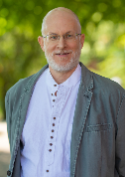
Joe Cole is an Associate Professor in the Center for Justice and Peacebuilding at Eastern Mennonite University. Joe graduated with a Ph.D. in Philosophy from Duke University. His research and teaching interests include restorative justice and restorative practices, nonviolent social change, racial equity and social justice, and ecovillages and sustainable communities. In addition to his teaching, Joe is a facilitator who supports communities in developing cooperative skills, collaborative governance, and conflict transformation. He is the author of “Skill Building for a Culture of Collaboration,” Communities magazine #181; “Ecovillages, Sustainability, and Social and Environmental Healing,” in Rinker & Lawler (Eds.), Realizing Nonviolent Resilience (Peter Lang, 2020); “Photography, Healing, and Justice in Appalachia,” in the Journal of Transdisciplinary Peace Praxis, (Vol. 3, No. 1, 2021); and “What’s in a Name? Connecting Sustainable Community and Racial Justice,” in Ruiz (Ed.), Comunidades Intencionales: Utopias Concretas en la Historia, (Autonomous University of Madrid, 2023).
-
Lisa CollinsStrategies for Trauma Awareness and Resilience (STAR), Level 1 - PAX 540
Meet Dr. Lisa Collins, Ed.D., an absolute powerhouse who has mastered the art of blending
 education, trauma healing, and environmental advocacy into a unique career mix, with
a solid foundation of over 30 years in education, including teaching, leadership,
and educational research publications. Lisa holds degrees in psychology and education
from California State Long Beach, National University, and Lewis and Clark College;
she's not just an assistant professor at Lewis and Clark College but also a sought-after
business consultant in workforce development.
education, trauma healing, and environmental advocacy into a unique career mix, with
a solid foundation of over 30 years in education, including teaching, leadership,
and educational research publications. Lisa holds degrees in psychology and education
from California State Long Beach, National University, and Lewis and Clark College;
she's not just an assistant professor at Lewis and Clark College but also a sought-after
business consultant in workforce development.Lisa's not just your everyday professor. She's a staunch advocate for trauma healing and racial reconciliation. She puts her immense knowledge to work, fostering community bonds and promoting healing. If you fancy a TEDx Talk or a good read, you can catch a glimpse of her work titled "Love of Light: A Guide to Peace and Oneness" or her forthcoming book "The Truth About Trauma" (Llewellyn 2025). Or you could tune into her podcast "Love and Light with Dr. Lisa: Everyday Living in Peace," where she delves into the world of uplifting healing practices.
But Lisa doesn't stop there. She's also devoted to exploring the environment and advancing racial healing. Her collaboration with the nonprofit Love Is King, where she serves as a guide assistant, is a testament to her commitment. She works tirelessly to encourage BIPOC leaders to dive into the natural world, acknowledging the therapeutic value of such experiences.
However, Lisa's talents extend beyond her professional roles. She's also a creative force, which she passionately expresses through her work as a playwright. Her works have graced stages in New York and Portland. Her acclaimed short film, "Be Careful What You Ask For," sparks critical conversations
on race, showcasing her diverse talents and interests.When she's not teaching, consulting, healing, advocating, or creating, Lisa contributes to various boards and committees. Some of them include the Oregon Assembly of Black Affairs, where she was a board member and secretary, the Trauma Awareness and Resilience Strategies advisory board at the Center for Justice and Peace building in Virginia, where she collaborated on updates to the model, and the Alaska Wilderness League, where she works on protecting Alaska's people, land and animals.
In summary, Dr. Lisa Collins, Ed.D., is a multi-talented professional who intertwines academic, therapeutic, and creative elements into a rich tapestry of service. Her significant contributions to education, healing, and environmental advocacy, particularly for underserved communities, underscore her versatility and the profound impact she has on society. Her dedication to these communities
is truly inspiring. -
Christine E. Crouse-Dick
The Art of Slow Leadership - PAX 687
As a professor of communication and a faculty dean, Christine specializes in

communication that explores intersections of gender, race, class, and media. Her
philosophy of leadership emphasizes reflection, honesty, and authenticity, aligning with her research that prizes storytelling as a method of data analysis. As a coach and facilitator, Christine guides individuals in weaving together their narratives as a means of nurturing interconnectedness. She is a founding member of the Bethel College Truth, Racial Healing & Transformation (TRHT) Campus Center, which aims
to erase barriers to equal treatment and opportunity by working toward narrative
change, racial healing, and relationship building on college campuses and in their
surrounding communities. -
Paula Ditzel Facci
-
Rachel Epp Buller
The Art of Slow Leadership - PAX 687
Rachel is an educator, a Deep Listener, and a mother of three. She brings this range

of inquiry to Slow Leadership, helping Institute participants seek out creative
practices that privilege care for themselves and others. Rachel has honed her
leadership skills through her work as a national board member of the Women’s
Caucus for Art, a Fulbright Scholar to both Germany and Canada, and recent Chair of the Faculty at Bethel College (KS/US). -
Jamila Gaskins
-
Amanda Gross
Community Organizing - PAX 694
Amanda K Gross (she/her) is an intersectional anti-racist organizer, mixed-media fiber artist, and author of White Women, Get Ready. Born in the heart of Atlanta, Georgia to two white Mennonites, Amanda (she/her) was
raised in the social justice legacies of Dr. King and her Anabaptist ancestors. She
was also raised to be a good little white girl in a system built for her advantage.
Over the past two decades, she has committed to the life, study, and embodied work of social justice, including studies in Restorative Justice, Conflict Transformation, and Sociology,
apprenticing with YogaRoots On Location’s Anti-Racist Raja Yoga School and the People’s Institute for Survival & Beyond’s Undoing Racism Workshop, and organizing with Youth Undoing Institutional Racism, the American Friends Service Committee, and the Black Girls Equity Alliance. As an artist and trained yoga instructor, she integrates creative embodied practices
throughout her community organizing. Amanda has an MA in Conflict Transformation from Eastern Mennonite University’s Center for Justice and Peacebuilding and a PhD in Expressive Arts at the European Graduate School where her research investigates how arts and culture can support white settlers in sustaining the life-long work of anti-racism and decolonization. Her first full length book, White Women, Get Ready: How Healing Post-Traumatic Mistress Syndrome Leads to Anti-Racist Change was published in July 2024. She has a chapter in Resistance: Confronting Violence, Power and Abuse within Peace Churches and one in the forthcoming book, Bodies and Beliefs: Purity Culture and the Rhetoric of Religious Trauma edited by Mari Ramler and Victoria Houser.
of White Women, Get Ready. Born in the heart of Atlanta, Georgia to two white Mennonites, Amanda (she/her) was
raised in the social justice legacies of Dr. King and her Anabaptist ancestors. She
was also raised to be a good little white girl in a system built for her advantage.
Over the past two decades, she has committed to the life, study, and embodied work of social justice, including studies in Restorative Justice, Conflict Transformation, and Sociology,
apprenticing with YogaRoots On Location’s Anti-Racist Raja Yoga School and the People’s Institute for Survival & Beyond’s Undoing Racism Workshop, and organizing with Youth Undoing Institutional Racism, the American Friends Service Committee, and the Black Girls Equity Alliance. As an artist and trained yoga instructor, she integrates creative embodied practices
throughout her community organizing. Amanda has an MA in Conflict Transformation from Eastern Mennonite University’s Center for Justice and Peacebuilding and a PhD in Expressive Arts at the European Graduate School where her research investigates how arts and culture can support white settlers in sustaining the life-long work of anti-racism and decolonization. Her first full length book, White Women, Get Ready: How Healing Post-Traumatic Mistress Syndrome Leads to Anti-Racist Change was published in July 2024. She has a chapter in Resistance: Confronting Violence, Power and Abuse within Peace Churches and one in the forthcoming book, Bodies and Beliefs: Purity Culture and the Rhetoric of Religious Trauma edited by Mari Ramler and Victoria Houser. -
Katie Mansfield

Dr. Katie Mansfield works to foster just, life-giving patterns and (re)generate creativity through collaborative, arts-based, embodied learning with individuals and groups facing trauma, adversity, and conflict. For about two decades working and learning in peace and justice education in various contexts, she has developed and facilitated in-person and online training in trauma sensitivity, resilience building, and creative approaches to peacebuilding. From 2015-2022, Katie was director and then lead trainer for Strategies for Trauma Awareness (STAR) at Eastern Mennonite University’s Center for Justice and Peacebuilding. She has facilitated STAR trainings and developed and customized curriculum and care strategies for various partners, including groups in Afghanistan, Bosnia & Herzegovina, Croatia, Fiji, Lebanon, Kenya, Mexico, South Sudan, Tanzania, and organizations and communities around the US.
Previously she was based in Kenya (2010-13) as Peacebuilding Coordinator for Mennonite Central Committee after working with CDA Collaborative Learning Projects’ Listening Project (2008-09) and apprenticing with John Paul Lederach to support peace initiatives and peacebuilders in Southeast Asia, Argentina, Colombia, and in the US (2008-10). Her doctoral work in expressive arts and conflict transformation was anchored at EGS in Switzerland. Katie’s thesis was entitled “Re-friending the Body: Expressive Arts-based, Embodied Learning for Building Resilience.” She has also trained as a yoga instructor (RYT-200), in JourneyDanceTM, and in personal embodiment at the Tamalpa Institute in California. She is on the board of the Drums No Guns Foundation based in Richmond, Virginia, and she is actively engaged as a member of the Shalom Mennonite Congregation in Harrisonburg. Dancing and meditation are her daily medicines, including with the online Dancing Resilience community she and others established in 2020. She completed an MA in Peace Studies at Notre Dame’s Kroc Institute and her AB in History at Harvard-Radcliffe. She also spent eight years on a rather different career path working for Goldman Sachs in New York and London (1996-2004). She is originally from a New York suburb and is currently based in the Shenandoah Valley of Virginia. -
Wayne Marriott
Wayne Marriott holds an MA in Conflict Transformation from Eastern Mennonite University

in Virginia. [Class of 2018]. He is a dispute resolution practitioner based in Auckland and Christchurch, Aotearoa, New Zealand.
Wayne has mediated in various jurisdictions since 2000 and has been an Organisational Ombuds practitioner since 2013. He is the Ombuds for Auckland University of Technology.
As a member of the International Ombuds Association, he is an active volunteer and currently serves on its board of directors as President-Elect. He is a Certified Organisational Ombuds.
Wayne established his private practice as Fleetwood Group Limited in 2002 to design
Ombuds services, restorative justice, conflict management and dispute resolution processes
for individuals and organisations. Wayne is actively involved in disputes and negotiations
across a range of jurisdictions, including family dispute resolution, building industry claims
and disputes, personal accident insurance claims, real estate complaints, family
disputes/separation, employment relations, and earthquake insurance disputes. He also
facilitates restorative justice cases referred from the criminal justice system.
In 2019, Wayne was awarded the Michael Klug Award by the Resolution Institute for
community mediation. In 2020, he was a finalist for the New Zealand Law Awards as
mediator of the year.
He is married to Natalie. Together, they have four children (Thomas, Hamish, William and
Brenna). You can find out more about Wayne at www.waynemarriott.orgWhakatauki [Proverb]
Ahakoa nga uaua, kia toa, kia kaha kia manawanui
[When you find things in life are difficult, stand strong, stand tall and be great of heart] -
Bridget Mullins
Facilitation as Emergent Practice: Co-Creating Ecological and Social Change - PAX 685
Bridget Mullins cultivates spaces of becoming.

Based in Seattle, she works as a facilitator, coach, and experience designer, guiding individuals and organizations through transformations imperative to our collective way forward. In a world of increasing complexity, her work is rooted in a simple premise: thriving isn't just about adapting, it's about intentionally evolving how we work, live, and grow together.
At Triangle Associates, an environmental facilitation firm, she leads collaborative projects at the intersections of environmental justice, clean energy access, and climate resilience. She brings together local, state, and federal agencies, Tribal governments, and community partners to co-design participatory processes that center lived experience and cultivate shared power in service of eco-cultural transformation. Her approach focuses on amplifying engagement, fostering creative collaboration, and creating the conditions for trust, participation, and collective intelligence to thrive.
Before this, she spent years facilitating experiential learning and organizational transformation across 11 countries, working alongside youth, educators, and activists navigating cultural and social change. A lifelong artist, she integrates movement, story, and creative expression into her work, informed by over a decade in applied theater and improvisation.
She is a professionally certified Integral Coach through New Ventures West and holds an M.A. in Conflict Transformation from Eastern Mennonite University and a B.A. in Peace Studies and Music from the University of Notre Dame. Her practice draws from a rich toolkit including Theory U, Liberating Structures, Open Space Technology, Design Thinking, the Art of Hosting, and Warm Data Labs—always in service of the understanding that relationship is the container from which all work gets done.
Her ways of working are deeply shaped by communities of practice where she continues to learn and evolve: Enspiral, DSIL Global, Liberating Structures, and New Ventures West.
-
Gaurav Pathania
-
Gloria Rhodes
Analysis: Understanding Conflict - PAX 533
Formation for Peacebuilding Practice - PAX 532
Gloria Rhodes is associate professor of peacebuilding and conflict studies at EMU. As a faculty member at the Center for Justice and Peacebuilding, she teaches conflict and peacebuilding
theory, personal formation for peacebuilding practice, and conflict analysis. She
also teaches courses in conflict transformation and peacebuilding for the undergraduate
program and the Masters of Nursing program. She has led semester and summer cross
cultural programs in Northern Ireland, the Republic of Ireland, Russia, South Korea
and the Navajo Nation. She has served as Department Chair of EMU's Applied Social
Science Department, Administrative Director of the Summer Peacebuilding Institute
at EMU and as a program assistant for the National Conference on Peacemaking and Conflict
Resolution. Her areas of expertise include peacebuilding curriculum development and
pedagogy, conflict assessment and situation analysis, practice-related research, group
facilitation and mediation, enneagram training, and cross cultural education. She
holds a PhD in conflict analysis and resolution from George Mason University.
at the Center for Justice and Peacebuilding, she teaches conflict and peacebuilding
theory, personal formation for peacebuilding practice, and conflict analysis. She
also teaches courses in conflict transformation and peacebuilding for the undergraduate
program and the Masters of Nursing program. She has led semester and summer cross
cultural programs in Northern Ireland, the Republic of Ireland, Russia, South Korea
and the Navajo Nation. She has served as Department Chair of EMU's Applied Social
Science Department, Administrative Director of the Summer Peacebuilding Institute
at EMU and as a program assistant for the National Conference on Peacemaking and Conflict
Resolution. Her areas of expertise include peacebuilding curriculum development and
pedagogy, conflict assessment and situation analysis, practice-related research, group
facilitation and mediation, enneagram training, and cross cultural education. She
holds a PhD in conflict analysis and resolution from George Mason University. -
Oscar Siwali
Analysis: Understanding Conflict - PAX 533
Oscar Siwali is the director of SADRA (Southern African Development and Reconstruction

Agency), a Non-Profit Organisation (NPO) and Not for Profit Company (NPC) registered in September 2013 to provide knowledge and skills through training and research to the Southern African Communities. The overall objective is to contribute in building a society that embraces non-violence, and peaceful methods of resolving conflict, using conflict transformation approaches in resolving differences.
Oscar previously worked at the Centre for Conflict Resolution as a Senior Project Officer and
Cluster Coordinator in the Mediation and Training Services Project (MTS) as well as in the
Conflict Intervention and Peacebuilding Support Project (CIPS). In this capacity he conducted
training workshops for various audiences, undertook and provided technical assistance to
partners and clients. He has worked with a range of organisations operating in the fields of
conflict resolution, human rights and HIV and AIDS, including Office of the Public Protector,
Department of Correctional Services (DCS), Department of Education, Department of Transport,
Department of Social Development, Department of Agriculture, Forestry and Fisheries, South
African Local Government Association (SALGA) South African Council of Churches (SACC) and
various religious bodies in South Africa. Outside of South Africa Oscar has worked with
Churches in Manicaland (Zimbabwe), in Lesotho and Swaziland with traditional leaders,
government departments, civil society organizations and religious leaders. Oscar has also
worked with CSOs, national human rights institutions, military and police in South Sudan,
Burundi, Ghana, Kenya, Lesotho, Malawi, Democratic Republic of the Congo (DRC), Rwanda,
Tanzania and so on.
Oscar has extensive experience in facilitation, community conflict resolution, training of
community stake holders and mediation in community disputes. Oscar is an ordained minister,
with 28 years’ experience as a pastor and moved from the love of people and interest in them
into developing diverse skills that can benefit communities. As a pastor he holds a Bachelor of
Theology and a Licentiate in Theology and has done numerous courses in Conflict Management,
Non-violence, Children’s rights and Human rights as well as Course work on MPhil in Conflict
Management at the then University of Port Elizabeth (UPE) and MA (Master of Arts) in Conflict
Transformation from CJP (Centre for Justice and Peacebuilding) of the Eastern Mennonite
University, USA. He worked for many years at the Quaker Peace Centre in Cape Town, where he
was involved in training, facilitation and mediation, largely in local communities, training youth,
teachers, principals, school area managers, pastors, and many others in very diverse fields.
Oscar is an accredited assessor and facilitator with the Education and Training Development
Practices (ETDP) Sector Education and Training Authorities (SETA). -
DeMointé Wesley
-
Sheryl Wilson
The Art of Slow Leadership - PAX 687
Sheryl is an experienced practitioner, trainer, and educator in restorative justice (RJ)

who works with individuals, non-profits, academic institutions, and public agencies around the world. She is currently the Vice President of Culture and Belonging at Bethel College, KS. Formerly Executive Director of the Kansas Institute for Peace and Conflict Resolution (KIPCOR) at Bethel College, she brings her expertise in Circle Process to the Slow Leadership Institute. She is a past president of the National Association of Community and Restorative Justice (NACRJ) board of directors. Sheryl is a founding team lead of the Bethel College TRHT Campus Center.

What’s next?
- Return to the SPI homepage