CJP-Ctr for Justice & Peacebld
CJP-Ctr for Justice & Peacebld Home Page
Faculty

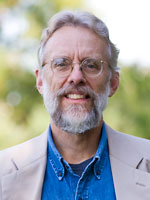
David R. Brubaker, Associate Professor of Organizational Studies. David earned a BS in Business Administration from Messiah College, an MBA from Eastern University, and a PhD from the University of Arizona, where he specialized in the study of change and conflict in religious organizations. David has trained or consulted with over 100 organizations, including in Africa, Asia, Latin America and Europe.
Since graduation from college in 1980 David served with several community development and conflict transformation organizations. These roles included Associate Director of Mennonite Conciliation Service and Assistant Director of Mennonite Central Committee’s Recife, Brazil program where he became fluent in Portuguese. David is the author of numerous articles on conflict transformation, both in organizations and internationally. He is also the author of “Promise and Peril: Understanding and Managing Change and Conflict in Congregations,” published by The Alban Institute and co-author (with Ruth Hoover Zimmerman) of “The Little Book of Healthy Organizations,” published by Good Books.

Hizkias Assefa is a professor of conflict studies at Eastern Mennonite University’s Conflict Transformation Program. Operating out of his base in Nairobi, Kenya, he works as a mediator and facilitator of reconciliation processes in a number of civil wars in Africa, Latin America, and Asia. He has worked as an attorney and consultant on conflict resolution and peacebuilding to the United Nations, European Union and international and national NGOs in situations of humanitarian crises. Mr. Assefa is currently an associate faculty member at the Institute of Conflict Analysis and Resolution at George Mason University. He holds a master of law from Northwestern University and a master in economics and Ph.D. in public and international affairs from the University of Pittsburgh.

Catherine Barnes has extensive experience facilitating dialogue and joint analysis, as well as teaching and training adults in various aspects of working with conflict, strategies for building peace and promoting social justice.She has lived and worked in more than 30 countries particularly in South Asia, Southeast Asia, Central Asia, Caucasus and Eastern Europe and worked throughout 2010 in Burma / Myanmar with Hope International Development agency. With almost twenty years working with various non-governmental organizations, Catherine’s practical experience varies widely and has included:
• Interactive process design and dialogue facilitation, strategic planning and collaborative learning, including large-scale conferences and more intimate deliberative dialogue processes engaging participants from across conflict divides;
• Teaching and training in peace processes, conflict transformation, dialogue, problem solving, leadership development and empowerment for social action;
• Policy research, policy dialogue and advocacy on issues connected to war-to-peace transition processes, political negotiation, statebuilding, and civil society roles in peacebuilding.
• Program and project development and proposal preparation; strategic reviews and evaluation.
FACILITATION AND PROCESS DESIGN
Major Conferences
• Global conference at UN headquarters “From Reaction to Prevention: the Roles of Civil Society in Preventing Armed Conflict and Building Peace”—process design, preparation and facilitation of plenary and large panel sessions of conference involving more than 1,000 participants from civil society, governments, and IGOs, New York, July 2005
• European Regional Conference of the Global Partnership for the Prevention of Armed Conflict—facilitated a consensus building process for more than 250 people to agree the European Action Agenda, Ireland, April 2004
• “Tools for Peace”—lead facilitator of this international, inter-religious peace conference, Sweden, November 2004
• “Role of the EU in the South Caucasus”, lead facilitator of conference for the Dutch Ministry of Foreign Affairs
Dialogue and joint-analysis
• Designed and facilitated numerous seminars for policy makers, political party representatives, civil society representatives and analysts – many involving participants from across conflict divides – to explore various issues in conflict prevention and learning from peace processes.
• Designed and facilitated a series of deliberative dialogue processes for ethnic leaders inside Myanmar/Burma leading to shared vision for future and action agendas for collaborative work.
• Facilitated a series of workshops for governmental and civil society representatives from five East European countries on key problems in majority/minority relations and wrote published reports of the outcomes.
Strategic planning and meeting facilitation
• Facilitated strategic planning processes, retreats, and meetings for Global Partnership for the Prevention of Armed Conflict, Saferworld, Free Tibet Campaign, Consortium Initiative on Nagorny-Karabakh, and PLATFORM.
TRAINING IN PEACEBUILDING, GOVERNMENT TRANSITION AND ADVOCACY
• Designed and delivered numerous bespoke training courses on peacemaking and peace processes for groups ranging from the UK government’s conflict adviser cadre, to members of armed insurgency groups, to civil society ‘insider partial’ peacemakers.
• Designed and facilitated training seminars for diplomats and UN officials on conflict resolution and negotiation skills and wrote training manual to accompany the course.
• Developed and delivered trainings and training-of-trainers courses on governance transition processes and roles of legislature for new ethnic politicians and civil society activists in Myanmar/Burma.
• Developed and delivered annual module on reconciliation and transitional justice for Responding To Conflict.
• Delivered a series of training seminars on strategies for public participation in peacemaking, including for the Swiss Ministry of Foreign Affairs and for Sri Lankan officials and civic leaders; gave talks on this theme for various audiences in London, New York, Washington and Yerevan.
• Taught EU specialization course on conflict transformation at Austrian Study Center for Peace and Conflict Resolution
• Advised a group of Dutch Malukans on possible roles of diaspora communities in conflict and peacebuilding.
• Designed and facilitated a range of training seminars for minority rights activists on human rights and advocacy, including tailored courses for advocacy at both the UN Human Rights Commission and at the Council of Europe.
• Conducted a series of seminars to train teachers, students and community activists in communication, conflict resolution, and problem solving skills.
PROGRAM DEVELOPMENT
• Served as strategic advisor to the Global Partnership for the Prevention of Armed Conflict (GPPAC)–2003-2005
• Conducted a review of Conciliation Resources’ Accord program, which led to the development of a new strategic direction for the program and a detailed ‘business-plan’ for achieving it.
• Developed and implemented a three-year program for Minority Rights Group to promote minority rights and cooperation between communities in Bulgaria, Hungary, Romania, Poland and Slovakia.
• Served as an expert advisor to the PEER project of the European Network Against Racism to develop empowerment projects for community organizations fighting discrimination throughout Europe
INDEPENDENT EVALUATION, STRATEGIC REVIEWS AND FIELD STUDIES
• Strategic Advisor and Reviewer for the Consortium Initiative on Nagorny-Karabakh – 2005-2007
• Conducted evaluation reviews of Conciliation Resources’ 5-year peacebuilding program in Georgia/Abkhazia; of International Alert’s peacebuilding program in Georgia/Abkhazia; and of Saferworld’s work in the Western Balkans
• Conducted evaluation research for CHF’s ‘Stable Society Study’ on the impact of participatory community development on conflict in Southern Serbia.
POLICY ADVOCACY AND AWARENESS RAISING
• Policy adviser for Conciliation Resources, responsible for researching and formulating its policy advocacy strategy, drafting policy analysis and materials, and delivering results on its policy change goals—from 2006-2010.
• Global Partnership for the Prevention of Armed Conflict: Facilitated and drafted the development of the Global Action Agenda, prepared submissions for various UN reports, represented GPPAC at UN General Assembly Hearings in advance of the Millennium Declaration Review Summit, lobbied UN officials and government representatives on key GPPAC goals, helped to catalyze the ‘Group of Friends for Conflict Prevention’ involving almost 40 missions.
• Prepared submissions and represented Minority Rights Group International in international fora (UN, OSCE, Council of Europe) and conferences to raise awareness of specific minority rights issues.
• Experienced in consulting with senior government and inter-governmental officials, civil society leaders, community activists and researchers on a diverse range of conflict, human rights, and policy concerns.
• Provided informal consultation on dynamics of peace processes and specific conflict situations with intermediaries, policy advisors, and activists responsible for developing peacebuilding strategies.
ACADEMIC TEACHING AND COURSE DEVELOPMENT
• Eastern Mennonite University, developed and taught classes on peace processes, public policy, group facilitation, advanced practice skills, and conflict analysis for masters degree students.
• UN University of Peace: taught graduate classs on conflict analysis, peace processes, negotiation and mediation.
• Europa-Universität Viadrina: developed and wrote an online master degree class on international conflict management.
• Applied Conflict Transformation Studies: advised Responding to Conflict in the development of this international distance-learning graduate program and authored core readers..
BOOKS, ARTICLES AND MONOGRAPHS
• Ending war: the need for peace process support strategies. 2009. Policy Brief. Conciliation Resources. http://www.c-r.org/resources/ending-war-need-peace-process-support-strategies-policy-brief
• Renegotiating the political settlement in war-to-peace transitions. 2009. Paper commissioned by UK Department for International Development for OECD-DAC International Dialogue on Statebuilding and Peacebuilding. http://www.c-r.org/resources/renegotiating-political-settlement-war-peace-transitions
• “Civil society and peacebuilding: mapping functions in working for peace” International Spectator Volume 44 No. 1 March 2009
• Peace Processes and Stabilization. Stabilization Issues Note. Briefing guidance commissioned by the UK Stabilization Unit. September 2008.
• Powers of persuasion: incentives, sanctions and conditionality in peace processes. Accord 19. Editor with Aaron Griffiths. Conciliation Resources, 2008. http://www.c-r.org/accord/incentives-sanctions-conditions
• Bridging the gap: improving UK support to peace processes. Working paper. Conciliation Resources, June 2007. http://www.c-r.org/resources/bridging-gap-improving-uk-support-peace-processes-%E2%80%93-working-paper
• Agents of Change: Roles of Civil Society in Conflict Prevention and Peacebuilding_. Issue Paper 2: Global Partnership for the Prevention of Armed Conflict. European Centre for Conflict Prevention, October 2006. http://www.gppac.net/documents/Rapport22.pdf
• “The Functional Utility of Genocide: Towards a Framework for Understanding the Connection Between Genocide and Regime Consolidation, Expansion and Maintenance” Journal of Genocide Research. Vol 7, No 3, September 2005.
• “Weaving the Web: Civil Society Roles in Working with Conflict and Building Peace” in van Tongeren et al, Eds. People Building Peace II: Successful Stories of Civil Society. Boulder and London: Lynne Rienner, 2005.
• The United Nations, Civil Society, and Preventing Armed Conflict: Principles and Recommendations for Operational Prevention. Paper for the Global Partnership for the Prevention of Armed Conflict, 2004
• UN-CSO Interaction in Conflict-Affected Communities. Paper for the Global Partnership for the Prevention of Armed Conflict, 2004 available on www.gppac.net
• Constructing a shared future?: Participatory Community Development and Conflict Mitigation in Southern Serbia. Stable Society Study. Washington DC: CHF, 2003.
• Owning the Process: Mechanisms for Political Participation of the Public in Peacemaking. Accord 13. Editor. London: Conciliation Resources, 2002. http://www.c-r.org/accord/participation
• Politics of Compromise: The Tajikistan Peace Process. Accord 10. Editor with Kamoludin Abdullaev. London: Conciliation Resources, 2001. http://www.c-r.org/accord/tajikistan
• Beyond Conflict: The Structure and Purposes of Genocide in the Twentieth Century. Doctoral Dissertation. Fairfax, VA: Institute for Conflict Analysis and Resolution, George Mason University, September 1999.
• The Impact of Armed Conflict on Children from Minority and Indigenous Communities. Editor. Minority Rights Group research contribution to Graça Machel UN Report on the Impact of Armed Conflict on Children, 1996.
• The Framework Convention for the Protection of National Minorities: A Guide for Non-Governmental Organizations with Manon Olsthoorn. London: Minority Rights Group, 1999. http://www.greekhelsinki.gr/pdf/FCNM-NGO-Guide.pdf
• “Minority Children of Somalia” in War: The Impact on Minority and Indigenous Children with Lorne Stockman. London: Minority Rights Group, 1997. http://www.minorityrights.org/?lid=10111
• Inter-group Conflict in Schools: Strategies and Resources, with Applied Practice and Theory research team. Fairfax, Virginia: Institute of Conflict Analysis and Resolution, 1994.
TRAINING MATERIALS AND COURSE READERS
• Creating Our Future: Responsive Leadership and Empowered Constituencies. Training manual and resource pack. Hope International Development Agency, 2011.
• Theories of Conflict: Causes, Dynamics and Implications, Applied Conflict Transformation Studies Series. Birmingham UK: Responding to Conflict, 2005
• Designing and Facilitating Conflict Transformation Processes, Applied Conflict Transformation Studies Series Birmingham UK: Responding to Conflict, 2005
• Conflict Resolution and Negotiation: A Practical Guide to Diplomacy After the Cold War, Washington: Institute of World Affairs Publications, 1994
• The Maun Sea Revitalization Project: A Complex Simulation Exercise for International Multilateral Negotiations. Washington: Institute of World Affairs Publications, 1994
PUBLISHED CONFERENCE AND SEMINAR REPORTS
• Tools for Peace?: The Role of Religion in Conflicts. Uppsala, Sweden: Life & Peace Institute, 2005
• The European Union and the South Caucasus: Opportunities for Intensified Engagement. Seminar Report. Netherlands Ministry of Foreign Affairs and European Centre for Conflict Prevention, May 2004
• Sierra Leone Peace Process: Learning from the Past to Address Current Challenges. London: Conciliation Resources
• Ideas for Change: Skills-Exchange Workshop Reports, with Anna-Mária Bíro. London: Minority Rights Group, 1999.
MAJOR SPEECHES, CONFERENCE PAPERS AND PRESENTATIONS
• “Peacebuilding and statebuilding: issues in operationalizing DFID’s new approach” plenary presentation at DFID Policy Seminar: Best Practice in Fragile and Conflict Affected States, Wilton Park Conference 955, March 2009
• “Sanctions, incentives and conditionality in peacemaking: issues for the UN” lead presentation at workshop for the UN Department of Political Affairs, July 2008
• “Talking with the enemy: improving political strategies for addressing armed conflict” Speech to the UK All-Party Parliamentary Group on Conflict Issues, December 2007
• “Setting the Agenda: Challenges and Contributions for Civil Society Roles in Peacebuilding” plenary speech at ADM/CPA Conference on Mainstreaming Peacebuilding in Public Policy, Ireland, October 2005
• “Making the Shift to Prevention” plenary speech at Dag Hammarskjöld Conference ‘UN and Global Security’ organized by the Swedish Government / UN Association of Sweden, February 2005
• “State-Building: the Challenges of Participation and Ownership” paper presented at State-Building Policy Seminar organised by International Peace Academy and the Center on International Cooperation, New York, November 2004
• “Ownership of the Transition and Peace Processes” presentation to UK Government / Wilton Park Conference on Managing the Transition from International Military Intervention to Civilian Rule: Breaking the Conflict Cycle, December 2003
• “Five Key Challenges for Governance in Central Asia” paper presented at International Peace Academy / Diplomatische Akademie Wein’s 32nd Annual ‘Vienna Seminar’, July 2002
• “Comparative Experiences in International Peacemaking” paper presented at the UNESCO / Government of Tajikistan International Symposium on the Historical Experience of Tajik Peacemaking, Dushanbe, April 2001.
• “Toward a Conflict Theory of Genocide” paper presented at the annual meeting of the International Society of Political Psychology, July 1995.
• “The Origins of Communal Conflict in South Asia” paper presented at the Conference on Peacemaking, Education, and Development, October 1993.
EMPLOYMENT
• EASTERN MENNONITE UNIVERSITY, Associate Professor Strategic Peacebuilding and Public Policy, Aug 2011-Present (ongoing)
• INDEPENDENT CONSULTANT, working for NGOs, inter-governmental organizations and governments on strategies and processes for conflict transformation and positive change, from January 2002 (ongoing)
• CONCILIATION RESOURCES, Accord Programme Manager / Series Editor, May 2000–Jan 2002, London
• MINORITY RIGHTS GROUP INTERNATIONAL (MRG), Programme Co-ordinator for Europe/FSU/ Americas, Nov 1995–Oct 1998, London
• INSTITUTE OF WORLD AFFAIRS, Program Associate, Jan 1994–Oct 1995, Washington, DC
• JOHN C. NEWMAN, P.C., Legal Assistant, Oct 1992–Jan 1994, Washington, DC
• MENTAL HEALTH LAW PROJECT, Children’s SSI Campaign Assistant, Washington, DC
• SENECA COMMUNITY BEHAVIORAL HEALTH CENTER, Regional Youth Specialist and Adolescent Therapist, May 1989–Oct 1990, Lewisburg, West Virginia
• FAMILY REFUGE CENTER, Program Coordinator, June 1987–Aug 1988, Lewisburg, West Virginia
• OHIO PUBLIC INTEREST RESEARCH GROUP, Peace and Social Justice Coordinator, Sept 1983-June 1985

Barry Hart is a professor of Trauma, Identity and Conflict Studies in the Center for Justice and Peacebuilding. He was the he Academic Director of the Center for Justice and Peacebuilding for three and a half years (2009-2012); and from 1997- 2010, held the same position in the Caux Scholars Program, Caux, Switzerland. Dr. Hart has conducted workshops on psychosocial trauma recovery and reconciliation in Northern Ireland, Liberia, Sierra Leone, Uganda, Burundi and among Rwandan refugees in Tanzania. Hart has lived and worked in the Balkans where he developed and led trauma and conflict transformation programs for schools, communities and religious leaders. Barry was engaged in a three year peacebuilding institute and curriculum development project between EMU and the University of Hargeisa in Somaliland (2008-2011). He holds a Ph.D. in Conflict Analysis and Resolution from the Institute for Conflict Analysis and Resolution (ICAR), George Mason University.

Carl Stauffer was born and raised amidst the war in Vietnam. In 1975, his family fled Vietnam and moved to the Philippines just as the Marcos regime was beginning to crumble. After completing his university education in 1985, Stauffer worked in the Criminal Justice and Substance Abuse fields. In 1988, he was ordained to the ministry and joined an urban, inter-racial church plant and community development project in the inner-city of Richmond, Virginia. In 1991, Stauffer became the first Executive Director of the Capital Area Victim-Offender Mediation Program in Richmond.
In 1994, Stauffer and his family moved to South Africa under the auspices of the Mennonite Central Committee (MCC), a faith-based international relief and development agency. In South Africa, Stauffer worked with various transitional processes such as the Peace Accords, Community-Police Forums, the Truth and Reconciliation Commission and Local Community Development structures. From 2000 to 2009, Stauffer was appointed as the MCC Regional Peace Adviser for the Southern Africa region. His work has taken him to twenty African countries and ten other countries in the Caribbean, Middle East, Europe, and the Balkans.
Stauffer’s academic interests focus on narratology, transitional justice, and post-war reconstruction and reconciliation. His research concentrates on the critique of transitional justice from a restorative frame, and the application of hybrid, parallel indigenous justice systems.
Stauffer is married to Dr. Carolyn Stauffer who teaches Sociology at EMU, and is the proud father of two adult children. He enjoys worship, the Arts, nature, a good dose of humor and cruising on his motorcycle.

Widely known as “the grandfather of restorative justice,” Zehr began as a practitioner and theorist in restorative justice in the late 1970s at the foundational stage of the field. Zehr continues in this third decade to deepen the principles of restorative justice and grow its practice worldwide. He has led hundreds of events in more than 25 countries and 35 states, including trainings and consultations on restorative justice, victim-offender conferencing, judicial reform, and other criminal justice matters. His impact has been especially significant in the United States, Brazil, Japan, Jamaica, Northern Ireland, Britain, the Ukraine, and New Zealand, a country that has restructured its juvenile justice system into a family-focused, restorative approach.
A prolific writer and editor, speaker, educator, and photojournalist, Zehr actively mentors other leaders in the field. More than 1,000 people have taken Zehr-taught courses and intensive workshops in restorative justice, many of whom lead their own restorative justice-focused organizations, such as the Council for Restorative Justice at Georgia State University, the Youth Justice Initiative in Iowa, and Mediation Northern Ireland (a major contributor to peace in Northern Ireland).
Zehr was an early advocate of making the needs of victims central to the practice of restorative justice. A core theme in his work is respect for the dignity of all peoples.
From 2008-2011 he served on the Victims Advisory Group of the U.S. Sentencing Commission. He serves on various other advisory boards.
For his blog, see http://emu.edu/blog/restorative-justice/
(For his photography, see www.howardzehr.com)
Adjunct Faculty
Staff

Jan Jenner directs the Practice & Training Institute of the Center for Justice & Peacebuilding. She formerly served as co-country representative for seven years with Mennonite Central Committee in Kenya. She holds a masters in conflict transformation from EMU.

Amy Potter Czajkowski works for the Women’s Peacebuilding Leadership Program coordinating monitoring and evaluation and curriculum development. Amy is an adjunct instructor teaching in the areas of program evaluation and peacebuilding practice. She was the Program Director of Coming to the Table, an initiative that addresses the legacies and aftermaths of the US institution of slavery and has also served as Associate Director of the Practice and Training Institute and Coordinator of University Accord, a campus-wide program at EMU that provides mediation, facilitation and restorative justice services. Her areas of interests include reconciliation, historical trauma, trauma healing, process design and facilitation, evaluation and program development. Before coming to CJP, she worked at the Iowa Peace Institute conducting mediation, peer mediation, and conflict resolution trainings as well as intervening in interpersonal and organizational conflicts. She holds a B.A. from Principia College and an MA in conflict transformation from Eastern Mennonite University’s Center for Justice and Peacebuilding. Amy is married with two sons, a stepdaughter and stepson.

Jayne Seminare Docherty is a professor of leadership and public policy at the Center for Justice and Peacebuilding at Eastern Mennonite University. She has also taught at George Mason University and Columbia College (South Carolina). Professor Docherty earned her Ph.D. at the Institute for Conflict Analysis and Resolution at George Mason University and she holds an undergraduate degree in religious studies and political science from Brown University. She also studied theology at the University of St. Andrews in Scotland.
Professor Docherty consults with organizations and communities in transition, working with them to harness the positive energy of conflict and minimize its negative effects. Her current area of focus for research, writing and practice is improving the use of negotiation in unstable situations so that the results yield durable but flexible systems for creating long-term and sustainable peace with justice. She has also conducted research – especially action research projects – for nonprofit organizations; consulted on designing, monitoring and evaluating projects and programs; worked with universities on curriculum development; and conducted trainings on conflict analysis, negotiation, and program design.
Professor Docherty is an invited participant in a three-year project to develop new approaches to negotiation training that reflect current research findings and field experiences. Details on the project can be found at Developing ‘Second Generation’ Global Negotiation Education.
From 2007-2010, she worked with The Institute for Peace and Justice Education at Lebanese American University to develop and institutionalize a summer peacebuilding training program for young leaders interested in building peace in Lebanon.
Professor Docherty is Vice Chair of the Board of Directors for the Peace Appeal Foundation an organization that “supports peace and conflict resolution processes globally through inclusive, multi-track and multi-sector interventions designed to achieve agreed, fair and just outcomes.” She is also a member of the Association for Conflict Resolution where she served as Chair of the Research Section (2004-2007), the International Peace Research Association where she has served on the Council (2006-2008), and the International Studies Association (ISA).
Professor Docherty’s work is deeply influenced by Catholic teachings on peace and social justice. She worships at Emmanuel Episcopal Church in Harrisonburg.
The daughter of a career military officer, Professor Docherty has served as a consultant with the 3D Security Initiative. She has a strong interest in forging a peace movement that takes the issue of security seriously and that includes the voices of active and retired military personnel. She was involved in the early efforts to adapt the Seminars for Trauma Awareness and Resilience program for use with communities that are welcoming soldiers returning from Iraq and Afghanistan, a project that helped lay the foundation for the Transforming the Wounds of War program.
Professor Docherty is the author of two books:
• Learning Lessons from Waco: When the Parties Bring Their Gods to the Negotiation Table (Syracuse University Press)
• The Little Book of Strategic Negotiation: Negotiating During Turbulent Times (Good Books)
Her papers on negotiating difficult conflicts in unstable settings have been published in Venturing Beyond the Classroom, The Negotiator’s Fieldbook: The Desk Reference for the Experienced Negotiator, Terrorism and Political Violence, Nova Religio, and the Marquette Law Review. Professor Docherty’s work on culture and negotiation has been incorporated into three different textbooks used in law schools around the country.

Phoebe Kilby is energized by her opportunity to support the Center for Justice and Peacebuilding through fundraising. She received a graduate certificate from CJP in 2004 and sees her work in the Development Office at EMU as forwarding CJP’s important peacebuilding work around the world. Phoebe brings a business background to her development work, having owned and managed with her husband, Barry, an environmental and land use planning consulting firm for 20 years. She has been a volunteer fundraiser for a number of non-profits, including serving as president of the board for Response, the domestic violence program in Shenandoah County, Virginia.

Lindsay started at the Center for Justice and Peacebuilding in August 2012 as the Office Coordinator and Assistant to the Executive Director. She is also currently the Program Coordinator for the Zehr Institute for Restorative Justice.
Before coming to CJP, Lindsay lived in Philadelphia for 5 years, attending law school and working as a law clerk to a federal judge. Prior to that, she spent 2 years with Mennonite Voluntary Service in San Francisco, volunteering at Pace e Bene Nonviolence Service.
Lindsay is from Oregon and therefore enjoys camping, backpacking and cross country road trips. She recently adopted a puppy named Maggie, the cutest dog in the world, and likes to spend time cooking and gardening.

Janelle Myers-Benner completed undergraduate studies in justice, peace and conflict studies, with minors in Spanish and psychology, at EMU in April 2001. Prior to that she spent time in Florida and Bolivia serving as a volunteer.

Prior to coming to CJP, Kathy Smith spent 18 years managing the funds transfer and cash management operations for the Federal Home Loan Bank of San Francisco.

Lora Steiner joined CJP staff in December 2010 as the Admissions & Marketing Coordinator.
Lora has lived in Bolivia and Guatemala, and spent three years in Washington, D.C. with Mennonite Central Committee where she worked in public policy. She has also worked as a freelance writer and editor. Lora holds a B.A. in history from Eastern Mennonite University and a Master of Divinity from Drew University in Madison, New Jersey.