Eastern Mennonite University

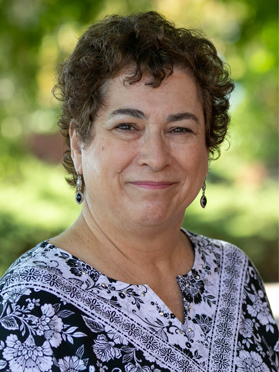
Jayne Docherty

“My mission is to create learning communities of teacher-learners and learner-teachers. The focus of my teaching is peacebuilding or, put another way: learning to harness the positive energy of conflict while minimizing its destructive potential. I am on sabbatical in 2008-2009 and will be on a half-time teaching contract starting fall semester 2009. I will be working on a project overseas in the fall semesters and teaching during spring semesters and Summer Peacebuilding Institute. I will return to full-time teaching in January 2012.

I believe in having fun in the classroom, but my students will tell you that I also promote rigor in thinking and writing and I focus on developing the personal and professional skills we need to work on peacebuilding. I incorporate opportunities to practice core competencies that have been identified as necessary and valuable by employers into course assignments. When possible, I incorporate real-world projects into my classes by having students work with me on a project or by crafting assignments that serve the research and development needs of our Practice and Training Institute while also meeting student learning goals. In all of my classes, I connect academic learning to personal reflection because that is the only way we can become reflective practitioners of peacebuilding."

Began service: August 2001

Jayne Seminare Docherty is a professor of conflict studies at the Center for Justice and Peacebuilding at Eastern Mennonite University. She has also taught at George Mason University and Columbia College (South Carolina). Professor Docherty earned her Ph.D. at the Institute for Conflict Analysis and Resolution at George Mason University and she holds an undergraduate degree in religious studies and political science from Brown University. She also studied theology at the University of St. Andrews in Scotland.

Professor Docherty consults with organizations and communities in transition, working with them to harness the positive energy of conflict and minimize its negative effects. Her current area of focus for research, writing and practice is improving the use of negotiation in unstable situations so that the results yield durable but flexible systems for creating long-term and sustainable peace with justice. She has also conducted research – especially action research projects – for nonprofit organizations; consulted on designing, monitoring and evaluating projects and programs; worked with universities on curriculum development; and conducted trainings on conflict analysis, negotiation, and program design.

For the next three years, her practice focus will be on Lebanon and Burma/Myanmar. In Lebanon, she is working in collaboration with The Institute for Peace and Justice Education at Lebanese American University on a multi-year effort to develop and institutionalize a summer peacebuilding training program for young leaders interested in building peace in Lebanon. In Burma/Myanmar, she is working as a consultant and trainer with groups that are supporting the transition from military to civilian rule with the goal of promoting sustainable peace with justice for the country.

Professor Docherty is a member of the Board of Directors for the Peace Appeal Foundation an organization that “supports peace and conflict resolution processes globally through inclusive, multi-track and multi-sector interventions designed to achieve agreed, fair and just outcomes.” She is also a member of the Association for Conflict Resolution where she served as Chair of the Research Section (2004-2007), the International Peace Research Associaton where she has served on the Council (2006-2008), and the International Studies Association (ISA).

Professor Docherty is a member of Blessed Sacrament Catholic Community in Harrisonburg, Virginia. Her work is deeply influenced by Catholic teachings on peace and social justice.

The daughter of a career military officer, Professor Docherty now serves as a consultant with the 3D Security Initiative. She has a strong interest in forging a peace movement that takes the issue of security seriously and that includes the voices of active and retired military personnel. She was involved in the early efforts to adapt the Seminars for Trauma Awareness and Resilience program for use with communities that are welcoming soldiers returning from Iraq and Afghanistan, a project that helped lay the foundation for the Transforming the Wounds of War program.

Professor Docherty is the author of two books:

Learning Lessons from Waco: When the Parties Bring Their Gods to the Negotiation Table (Syracuse University Press)

The Little Book of Strategic Negotiation: Negotiating During Turbulent Times (Good Books)

and a significant contributor (four chapters) to The Negotiator’s Fieldbook: The Desk Reference for the Experienced Negotiator (American Bar Association). She is also the author of numerous articles in journals such as Terrorism and Political Violence, Nova Religio, and the Marquette Law Review. Her work on culture and negotiation has been incorporated into three different textbooks used in law schools around the country.

Education

A.B., Brown University (1978) Religious Studies and Political Science
Ph.D., George Mason University (1998) Conflict Analysis and Resolution

Publications
  • Docherty, J. S. (2006). The unstated models in our minds. In A. K. Schneider & C. Honeyman (Eds.), The negotiator’s fieldbook: The desk reference for the experienced negotiator (pp. 7-16). Washington, DC: American Bar Association, Dispute Resolution Section.
  • Caton Campbell, M., & Docherty, J. S. (2006). What’s in a frame? In A. K. Schneider & C. Honeyman (Eds.), The negotiator’s fieldbook: The desk reference for the experienced negotiator (pp. 37-46). Washington, DC: American Bar Association, Dispute Resolution Section.
  • Docherty, J. S., & Caton Campbell, M. (2006). Consequences of principal and agent. In A. K. Schneider & C. Honeyman (Eds.), The negotiator’s fieldbook: The desk reference for the experienced negotiator (pp. 497-504). Washington, DC: American Bar Association, Dispute Resolution Section.

  • Docherty, J. S. (2006). Negotiation, one tool among many. In A. K. Schneider & C. Honeyman (Eds.), The negotiator’s fieldbook: The desk reference for the experienced negotiator (pp. 565-572). Washington, DC: American Bar Association, Dispute Resolution Section.
  • Docherty, Jayne Seminare (March 2005). Little book of strategic negotiation: Negotiating during turbulent times. Intercourse, PA: Good Books.
  • Brown, J. G., Caton Campbell, M., Docherty, J. S., & Welsh, N. (2004). Negotiation as one of many tools. Marquette Law Review, 87(4), 853-860.
  • Caton Campbell, M. & Docherty, J. S. (2004). What’s in a frame? (That which we call a rose by any other name would smell as sweet). Marquette Law Review, 87(4), 769-781.
  • Docherty, J. S. & Caton Campbell, M. (2004). Teaching negotiators to analyze conflict structure and anticipate the consequences of principal-agent relationships. Marquette Law Review, 87(4), 655-664.
  • Docherty, J. S. (2004). Culture and negotiation: Symmetrical anthropology for negotiators. Marquette Law Review, 87(4), 711-722.
  • Docherty, J. S. (2004). Narratives, metaphors and negotiation. Marquette Law Review, 87(4), 847-851.
  • Docherty, J. S., Korobkin, R., & Honeyman C. (2004). Three conceptions of power. Marquette Law Review, 87(4), 861-874.
  • Docherty, J.S. (2003). Engaged Christian education in a multi-faith world. Mennonite Life, 58 (1).
  • Book review of Cults, Religion, and Violence (edited by David G. Bromley and J. Gordon Melton. New York: Cambridge University Press, 2003). Journal for the Scientific Study of Religion, 43(3), 451.
  • Docherty, Jayne Seminare (2001-2002). Within days of the September 11, 2001 attacks, the Conflict Transformation Program faculty and staff created The Beyond September 11 Web Site. I wrote or co-wrote 11 papers for that site.
  • Docherty, Jayne Seminare. (2001). Learning lessons from Waco: When the parties bring their gods to the negotiation table. Syracuse: Syracuse University Press.
  • Docherty, Jayne Seminare. (2001). Why Waco has not gone away: Critical incidents and cultural trauma. Nova Religio: The Journal of Alternative and Emergent Religions 5(1), 186-202.
  • Docherty, Jayne Seminare (2000). Foreword. In Catherine Wessinger, How the millennium comes violently: From Jonestown to Heaven’s Gate. New York: Seven Bridges Press.
  • Docherty, Jayne Seminare (1999). There is no cookbook for crisis negotiation: A response to Stuart Wright. Terrorism and Political Violence 11(2), 74-82.
  • Docherty, Jayne Seminare (1999). Bridging the gap between scholars of religion and law enforcement negotiators. Nova Religio: The Journal of Alternative and Emergent Religions 3(1), 8-26.
  • Docherty, Jayne Seminare (1998, Summer). Conflict takes place in three worlds: Searching for a holistic conflict resolution practice. Conciliation Quarterly, 9-11.
  • Docherty, Jayne S. (1996, June/July). Managing diversity during law enforcement siege management: the lessons of Waco. AIMD Research Notes, 6 & 7. Atlanta: The American Institute for Managing Diversity, Inc.
  • Docherty, Jayne S. (1996). The stewardship metaphor in forest resource management conflicts: A common language does not guarantee consensus. In D. McFarland (Ed.), Conflict analysis and resolution: Challenges for the times (pp. 191 208). Fairfax, Virginia: Institute for Conflict Analysis and Resolution.
Scholarly Presentations
  • Organizer of workshop series on Neurobiology and Conflict Resolution at Association for Conflict Resolution Annual Conference. Phoenix, Arizona, October 24-27, 2007.
  • Invited panel participant at the Alumni Symposium at the Institute for Conflict Analysis and Resolution. Creative Pedagogy for Teaching to Core Competencies in Peacebuilding and Conflict Transformation. George Mason University, Arlington, Virginia, September 15, 2007.
  • Invited panel participant and discussant at the launch of the new publication series. Complementary Approaches to Coexistence Work. Represented the 3D Security Initiative discussing coexistence work and security. Hosted by Brandeis University in New York City, July 19, 2007.
  • Invited panelist for “The New and the Newer in Negotiation (Session E14)” at The American Bar Association Section of Dispute Resolution Ninth Annual Dispute Resolution Conference ADR in Bloom: Politics and Collaboration in the Nation’s Capital. Washington, DC, April 27, 2007.
  • Invited participant “Engaging People in Peacebuilding,” a one-day workshop held at the International Studies Association 48th Annual Convention.Chicago, Illinois, February 27, 2007.
  • Chair of panel titled “The theory and practice of conflict resolution and post-conflict reconstruction” and Chair and Discussant for panel titled “Strategies for trauma awareness and resilience: Feminist practitioners” at the International Studies Association 48th Annual Convention.Chicago, Illinois, February 28-March 3, 2007.
  • Design, Monitoring and Evaluation for System Change Programs. Association for Conflict Resolution Annual Conference. Philadelphia, Pennsylvania, October 25, 2006. (A 6 hour pre-conference workshop with Cheyanne Church).
  • User-friendly research tools for conflict resolution practitioners. Association for Conflict Resolution Annual Conference. Philadelphia, Pennsylvania, October 26, 2006. (With John Windmueller.)
  • What peace builders do and why and how it works. Association for Conflict Resolution Annual Conference. Philadelphia, Pennsylvania, October 27, 2006.
  • Using research as a conflict intervention tool. Association for Conflict Resolution Annual Conference. Philadelphia, Pennsylvania, October 28, 2006.
  • Being professional without being restrictively professionalized: How to increase the credibility of peace building. International Peace Research Association. Calgary, Canada, June 28-July 3, 2006.
  • Sustainable peace building architecture: What our field needs now and how to get it. International Peace Research Association. Calgary, Canada, June 28-July 3, 2006. (Plenary Panel)
  • Peace building theory-in-Practice: What 50 practitioners have learned about what works. International Peace Research Association. Calgary, Canada, June 28-July 3, 2006.
  • Working with Worldview Conflicts. Iowa Association for Dispute Resolution conference. Des Moines, Iowa, November 4-5, 2005.
  • Strategies for Trauma Awareness and Resilience (STAR). Association for Conflict Resolution Annual Conference. Minneapolis, Minnesota.
  • Best Practices for Intractable Conflicts. Association for Conflict Resolution Annual Conference. Minneapolis, Minnesota. (With Alma Abdul-Hadi Jadallah).
  • The Importance of “Worldview Conflict” – How Mediators Can Uncover the Worldview Assumptions of the Parties and Themselves. 2005 Regional Heartland Conference of Mediators. Kansas City, Missouri, April 2, 2005.
  • Assessing the Canon of Negotiation. Association for Conflict Resolution Annual Conference. Sacramento, California, September 30, 2004.
  • Getting Real: Negotiating across Worldview Divides. Institute for Conflict Analysis and Resolution (ICAR) Alumni Conference, September 13-14, 2002.
  • Exploring worldviews to improve conflict resolution practices. (With Anne DiDomenico) At the National Conference on Peacemaking and Conflict Resolution; Fairfax, Virginia, June 7-10, 2001.
  • Why won’t Waco go away? At the Annual Meeting of the Society for the Scientific Study of Religion; Houston, Texas, October 20, 2000. Part of a special session on the post-Waco trials, hearings, and special counsel report.
  • Was that a threat or a warning? Interpreting narratives of violence across a worldview divide at The American Society of Criminology Annual Meeting; Toronto, Canada, November 17, 1999.
  • Bridging the gap between religious scholars and law enforcement negotiators at the American Academy of Religion Annual Meeting; Orlando, Florida, November 21-24, 1998.
  • Dialogues between scholars of new religious movements and the FBI Critical Incident Response Group. American Academy of Religion Conference, 1998, 1999, 2000, and 2001.
  • Critical Incidents and the Constitution a workshop/dialogue organized by Critical Incident Analysis Group (CIAG), University of Virginia, January 8-9, 1998.
  • Militia – FBI Dialogues. Organized by Critical Incident Analysis Group (CIAG), at Michigan State University, March 27, 1997.
  • Negotiating identity: The narrative construction of ‘self’ and ‘other’ during the Waco standoff at The Fifth International Conference on Narrative; Lexington, Kentucky: October 18-20, 1996.
  • The lessons of Waco: What conflict resolvers can learn from the FBI/Branch Davidian negotiations at the University of Massachusetts Boston conference: Conflict Studies: A New Generation of Ideas; Boston, Massachusetts: October 4-5, 1996.
  • When worlds collide: Peacemaking with militia movements and armed apocalyptic religious sects at The 25th Annual Consortium on Peace Research Education and Development Conference; Washington, DC: August 8-11, 1996.
  • Worldviews as a form of diversity (with N. Carstarphen, J. Crocker & S. Garon) at the Global Conference on Managing Diversity; Athens, Georgia: September 7-10, 1995.
  • Worldview differences in conflict settings (with N. Carstarphen, J. Crocker & S. Garon) at National Conference on Peacemaking and Conflict Resolution; Minneapolis, Minnesota: May 25-30, 1995.
  • Environmental dispute resolution, the “Greening of the Pentagon,” and international security: A few words of caution at the Peace Studies Association Conference; San Francisco, California: April 7-10, 1994.
Exhibits, Performances and Productions

Public Lectures and Keynote Addresses

  • Redefining Our Security: 3D a New Approach to Peace. Ashland, Wisconsin, March 27, 2008.
  • Why Conflict Resolvers Need to Stop Talking Peace and Start Talking Security. Grinnell College (Iowa), February 8, 2007.
  • What Would Jesus Do? Transformative Approaches to Building a Justpeace World. Robbins Peace and Brotherhood Lecture at Berea College (Kentucky), October 20, 2005.
  • “Red, Blue, and Purple America: What Can Conflict Resolvers Offer a Divided Country?” Keynote Address at Embracing Conflict: Creating Opportunities for Change conference at Columbia College (South Carolina), May 6-7, 2005.
  • Lessons from Waco and Beyond. Keynote Address at 2005 Regional Heartland Conference of Mediators in Kansas City, Missouri, April 2, 2005.
  • Carpe Diem: Responding to the Crisis of the War on Terrorism. at Mennonite Central Committee Board of Directors Annual Meeting in Akron, Pennsylvania, June 11, 2004.
  • Finding a Basis for Long-Term Security in the Post-9/11 World. at Lycoming College (Pennsylvania), October 21, 2002.
  • Domestic and International Terrorism: Misunderstood Causes and Misguided Responses. Public lecture at Al-Hewar Cultural Center (Fairfax, Virginia), May 22, 2002.
  • When the parties bring their gods to the negotiation table: Lessons from Waco, September 11, and the Middle East. Public lecture at Juniata College (Pennsylvania), April 25, 2002.
  • What’s love got to do with it? Integrating trauma recovery, restorative justice, and peacebuilding in response to September 11. at The Greater New York Chapter of the Association for Conflict Resolution, (New York City), April 18, 2002.
  • Creating a big circle for a difficult discussion. Keynote Address for the Eastern Mennonite University Teach-In, October 15, 2001.
  • Moving forward by circling back: Revisiting our roots in search of new horizons. The Graduate Student Address at the University of Massachusetts Boston conference (Conflict Studies: A New Generation of Ideas), October 4, 1996.

Trainings and Workshops

  • Byblos, Lebanon (August 16-26, 2008).
    • Workshop at Lebanese American University (see below for more details about this ongoing project).
  • Grinnell, Iowa (June 3-6, 2008).
    • Conflict Analysis a Multi-disciplinary Approach to a Southwest Case Study. A workshop for Grinnell College faculty members working to introduce peacebuilding skills into their courses.
  • Byblos, Lebanon (August 17-19, 2007).
    • Conflict Analysis for Intervention Design at the Lebanese American University Conflict Resolution and Peacebuilding Summer Workshop. A training for students from Lebanon, Egypt, Palestine, Kuwait, and Yemen.
  • Arlington, Virginia (August 9, 2007).
    • Connecting the Academy to Conflict Transformation and Peacebuilding Practice. A workshop for Latin American academics sponsored by the Organization of American States and George Mason University.
  • Edmonton, Alberta, Canada (March 26-27, 2007).
    • Managing Deep Rooted/Values Conflicts. A workshop for municipal administrators and the mediators who work with them.
    • Also prepared a written guide for municipal administrators based on the workshop and our conversations about the issues they face.
  • London, England (March 12-13, 2007): In the Aftermath: Trauma Healing: A two-day workshop for religious leaders based on the Strategies for Trauma Awareness and Resilience (STAR) program. Sponsored by the London Mennonite Centre.
  • Brussels, Belgium (March 8, 2007): Peacebuilding in Our Own Backyard: Addressing Intercommunal Conflicts in Europe. A one-day workshop for civil society leaders in Europe. Sponsored by the Brussels Mennonite Centre.
  • Leuven, Belgium (March 5, 2007)
    • Strategic Relationship-Based Peacebuilding. What is it? How does it work? A one-day workshop for students in the Master of Conflict and Sustainable Peace at Katholieke Universiteit Leuven.
    • I have provided a workshop for this program each year since 2004
    • I have served as a consultant to the program organizers since 2004
  • Grinnell, Iowa (February 6-10, 2007)
    • Negotiating the Hard Cases: What if you Can’t Agree? Workshop for students and faculty on negotiating conflicts with a significant worldview component.
    • Workshop on careers in peace for Grinnell College students
    • Guest lectures in two courses
    • Consultation with Grinnell College faculty on developing a peace studies program
  • Arlington, Virginia (February 4, 2007)
    • Social Capital and Strategic Relationship-Based Peacebuilding. Workshop for students at the Institute for Conflict Analysis and Resolution, George Mason University.
  • Denver, Colorado (October 6, 2006):
    • The Global War on Terrorism (GWOT): Learning Lessons from Waco. Workshop for students and faculty at the University of Denver.
  • Chennai, India (June and early July 2005):
    • Keynote speaker at conference that convened CJP Fulbright graduates from the region with other academics and practitioners.
    • Organizer of panel presentation with CJP graduates at the same conference.
    • Conducted a two-day training in negotiation for middle level managers at Orchid Pharmaceutical.
  • Colombo, Sri Lanka (July 2005):
    • Four days consulting with the United Nations Development Programme in Sri Lanka. I reviewed and helped refine an initiative to bring Community Based Organizations (CBOs) more effectively into both post-tsunami and post-conflict development efforts in Sri Lanka.
    • Delivered a half-day workshop on strategic negotiation at the University of Peace program in Colombo. This program involves military members, NGO staff, civil society leaders, journalists, and others in a program of study that applies conflict analysis and conflict resolution skills to the situation in Sri Lanka.
    • Discussed using action research as a conflict intervention with young faculty members at Colombo University.
    • Delivered a lecture on strategic negotiation in the Bradford University program located in Colombo.
  • Jordan Institute for Diplomacy. One-day workshop on negotiation (January 11, 2005) and one-day workshop on adult learning and creative pedagogy (January 13, 2005). Amman, Jordan.
  • Mennonite Central Committee in Amman, Jordan (January 14-15, 2005): . Two-day advanced training in strategic peacebuilding for graduates of the Summer Peacebuilding Institute working in the Middle East.
  • Baku, Azerbaijan (2004): assisted with the development of training materials used in a 6-month program to train political and civil society leaders in Azerbaijan in multi-party negotiation skills.
  • Managing for Beef, Managing for Grass, Managing for Ecosystem Health: Renegotiating Reality in a Complex Environmental Conflict. In Fairfax, Virginia (May 30, 2003). Organization of American States (OAS) training for Latin American professionals involved in environmental conflict resolution work.
  • Can we do anything about worldview conflicts? Brownbag presentation at Institute for Conflict Analysis and Resolution (ICAR), George Mason University. January 30, 2003.
  • Advanced trainings for mediators and other community leaders working on complex conflicts or working in conflict-prone communities. Each workshop was developed for the specific community or organization.
    • Des Moines, Iowa (November 2005): Iowa Association for Dispute Resolution
    • Columbia, South Carolina (May 2005): Conference at Columbia College
    • Kansas City, Missouri (April 2005): Regional Heartland Conference of Mediators
    • Sierra Vista, Arizona (December 2002): Sonoran Borderlands Peacebuilding Initiative.
    • Folly Beach, South Carolina (October 1999): Council for Conflict Resolution.
  • STAR: Strategies for Trauma Awareness and Resilience program (formerly called Seminars on Trauma Awareness and Recovery).
    • Primary instructor for the peacebuilding, security, and terrorism component of the monthly seminars. Including updating and modifying the teaching modules in response to current events such as the wars in Afghanistan and Iraq and the election. Monthly from February 2002 until late 2005; as needed since then.
    • Instructor in the Intermediate STAR seminar. October 2004 and April 2005.
    • Developed and presented four follow-up workshops in New York City and surrounding area (with Ron Kraybill). Trained STAR graduates to conduct dialogues in their home communities using dialogue materials created from the STAR perspective.
    • Taught STAR Associates (STAR graduates) brought to Summer Peacebuilding Institute for further training in conflict analysis and conflict transformation skills. Summer 2003 and 2004.
    • Coached STAR graduates who are developing programs in their home communities and programs for specialized groups.
    • Developed a STAR course for use in seminaries and piloted the course at Eastern Mennonite Seminary. February 2005.
  • Spin-off workshops using STAR materials include:
    • United Church of Christ Peace and Justice Committee and Disaster Response Committee, Connecticut. November 2004.
    • Northern Ireland. STAR-based training at Irish School of Ecumenics (November 19, 2004); consultation with ecumenical group of women leaders of church groups (November 19, 2004); two, three-hour trainings for church women of all faiths at Edgehill Methodist Theological College (November 20, 2004); workshop on restorative justice and workshop on strategic peacebuilding at Reconciliation Conference sponsored by Think Again! (November 22, 2004).

Press Interviews and Media Citations

  • Vital Theology
    • “Cultural gaps separate most in U.S. from Muslims here and abroad: Meanwhile, Islam confronted with competing fatwas.” August 20, 2005.
    • “Is marginalization of Muslims at root of bombings: Governments seen repeating mistakes of Waco.” July 30, 2005.
  • Lessons from Waco by Wallace Ford. First published in Albuquerque newspaper on December 26, 2001. Posted on Foreign Policy in Focus on January 8, 2002.
Church, Community and Professional Service

Professional Leadership and Service

  • Chair of Research Section, Association for Conflict Resolution (2004-2007)
  • Member of Governing Council, International Peace Research Association (2006-2008)
  • Peer reviewer for International Negotiation.

Program Evaulations and Research Projects

  • Alexandria, Louisiana (August 2005): Evaluated a collaborative divorce program for the funding organization (Rapides Foundation).
  • Watershed Management Collaboration in the Shenandoah Basin. Water quality and water quantity are both becoming issues of concern in the Shenandoah Valley. In the absence of a watershed-level system for managing the use and treatment of surface water and groundwater, conflict is brewing. I have contributed the following support to conflict prevention efforts in the Shenandoah Basin.
    • Three action research projects with citizen water organizations (Friends of the North Fork of the Shenandoah and Friends of the Shenandoah). Fall 2003, Fall 2004, and Fall 2005.
    • Management consulting and capacity building with Friends of the North Fork and Friends of the Shenandoah.
    • Advising the Board of the Shenandoah Basin Project, the staff of Pure Water Forum 2000, and the Regional Water Resources Policy Committee on processes for promoting greater collaboration among decision-makers who affect water supply in the Valley.
  • Healthy Community Council, Harrisonburg and Rockingham County, Virginia.
    • Co-chair of Managing Growth Working Group. (February 2002-September 2002).
    • Training of focus group leaders for all working groups (February 2002).
    • Training of facilitators and recorders for Healthy Community Summit (January 2002).

Local Community and Church Service

  • Blessed Sacrament Catholic Church, Harrisonburg, VA.
    • Peace and Justice Committee
  • Latent Conflict Related to Poverty in Harrisonburg and Rockingham County. Public talk at the Interfaith Alliance Luncheon on
    December 7, 2006.
  • President of the First Street Homeowners Association in Broadway, VA (elected June 2006)
Honors, Awards and Grants
  • Developing ‘Second Generation’ Global Negotiation Education. Invited participant in a three-year project to develop new generation training programs that reflect current research findings on negotiation.
    • Conference in Rome, Italy (May 27-30, 2008).
    • Writing projects from the conference in process.
  • Negotiation Canon Project. Invited participant in project to define the “canon” of topics that should be taught in all negotiation courses.
    • Conference in Milwaukee, Wisconsin (November 7-9, 2003).
    • Production of special issue of Marquette Law Review. See publications for my contributions.
  • Supervisor for Nepali Journalist Grant (USIP 191-03S). Project to develop, test, and refine training materials for Nepali journalists. Primary work being done by Ameet Dhakal (CTP graduate and journalist) with supervision and assistance from me.
Professional Memberships
  • Association for Conflict Resolution
  • International Peace Research Association
  • American Academy of Religion
  • Peace and Justice Studies Association
Professional Conferences Attended
  • Quivira Coalition Annual Conference. Albuquerque, New Mexico, January 2008.
  • Association for Conflict Resolution annual conference. Phoenix, Arizona, October 24-27, 2007.
  • Peace and Justice Studies Association annual conference. Elizabethtown, Pennsylvania, September 27-30, 2007.
  • International Studies Association. Chicago, IL, February 28-March 3, 2007.
  • Quivira Coalition 6th Annual Conference: Fresh Eyes on the Land, Albuquerque, New Mexico, January 18-20, 2007.
  • Association for Conflict Resolution annual conference. Philadelphia, PA, October 25-28, 2006.
  • Invited participant in Consolidating Our Collective Wisdom: Best Counsel and Advice to the Next Generation.. Held at the Keystone Center in Keystone, CO, October 8-11, 2006.
  • Strategy Implementation Seminar at the Army War College in Carlilse, PA, July 25-27, 2006.
  • Invited participant in conference on Negotiating with Terrorists. Held at The International Institute for Applied Systems Analysis (IIASA), Vienna, Austria, June 9-10, 2006.
New Courses Taught

I organized a new seminar for spring semester 2008 that brought together all of our core faculty, enrolled students, and guests to explore three different cases in order to discern the commonalities and differences in our various areas of practice (trauma healing, restorative justice, conflict transformation, organizational development, and peacebuilding).

I also piloted a course on university peacebuilding curriculum development in Session IV of SPI 2008. The course was developed as part of a Practice Institute project working with the University of Hargeisa in Somaliland. Next year it will be further refined, opened up to faculty members from other universities, and I will co-teach it with Vernon Jantzi.

EMU Service
  • Member of Faculty Status Committee, 2007-2008.
  • Senator and Member of Faculty Senate Executive Committee, 2007-2008.
  • Faculty Senate representative to the President’s Cabinet, 2007-2008.
  • Co-facilitator of the Academic Structure Task Force (ASTF), 2006-2007.
  • Member of Interim Faculty Senate, 2006-2007.
  • Faculty Senate representative to the Graduate Council, 2006-2007.
  • Served on Board for the new CJP web based journal project, 2006-2007.

Recent Special Events at EMU

  • Peacebuilding is About Relationships at Hope for Peace day, May 19, 2007.
  • Panelist for U.S. Foreign Policy and How it Affects Americans, April 10, 2007.
Jayne Docherty

Office Phone: (540) 432-4627

Email:

IM: Skype:jayne.docherty

Office Location: MS 103

Office Hours: On sabbatical 2008-2009; not on campus