Chemistry Faculty and Student Research
Chemistry and biology majors at EMU participate in mentored research projects with professors who are experts in their fields. In addition to research done on our own campus, EMU students have participated in summer research programs at James Madison University, North Carolinas Research Triangle Park, National Institutes of Health in Beltsville, Maryland, and in Ghana, Africa.
Students may compete for Kauffman-Miller Research Awards, up to for $2500 for summer research supervised by EMU faculty.
The research interests of faculty and students are varied but each shares a common
thread creation care and chemistry for the common good.
Chemistry faculty also work closely with research projects in biology.
Students who work on a project for more than one summer typically see that project through to completion and present their findings at a scientific meeting such as the American Chemical Society, the American Society for Biochemistry and Molecular Biology or the local student chapter of the American Society for Microbiology.
Some students co-author research papers published in peer-reviewed scientific journals. For example:
- The externally derived portion of the hyperosmotic shock-activated cytosolic calcium pulse mediates adaptation to ionic stress in suspension-cultured tobacco cells
- Specificity of the fluorescein transport process in Malpighian tubules of the cricket Acheta domesticus
Research in the Teaching of Chemistry and Biology
Chemistry faculty Steve Cessna, Tara Kishbaugh, and Matt Siderhurst, along with Biology faculty Doug Graber Neufeld, JMU Psychology faculty Jeanne Horst, and Education faculty Lori Leaman were funded by a major NSF CCLI grant to promote the enhanced learning through authentic, relevant research experiences across the biology and chemistry curriculum. Through this project, the chemistry, biology, psychology, and educations departments completed a unique interdisciplinary project that seeks to promote deeper, more practical learning of higher order cognitive skills (HOCs), the nature of science (NOS), and oral and written scientific communication skills. A description of the rubric developed to measure these skills.
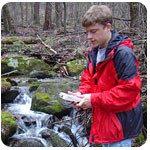 Tara Kishbaugh
Water quality monitoring in the local watershed related to bacterial contamination, run-off or hydrofracking
EMU is at the headwaters of the Blacks Run, a stream that runs through Harrisonburg. The Blacks Run is considered to be impaired by the VA Department of Environmental Quality due to over-sedimentation and elevated levels of bacteria. In collaboration with other volunteers in the area, students in EMU’s Environmental Chemistry class analyze the health of the stream using a variety of physical, chemical and biological indicators such as temperature, flow, nutrient levels (nitrates, phosphates, and others) and e coli.
Additionally, Dr. Doug Graber Neufeld and I are working with students Hannah Daley (chemistry and environmental science, 2017) and Janaya Sachs (chemistry, 2017) to gather baseline water quality information related to pH, turbidity, stream flow, as well as barium and strontium levels in an area of northwest Rockingham County. A collaboration with Trout Unlimited has increased the reach of this study as volunteers drop samples off at EMU for analysis. Other students, including Ben Stern (biochemistry, 2015), studied the toxicity of barium to zebrafish using a startle method. There is the possibility that this region of the county would become the first area in Virginia in which hydrofracking occurs. Should hydrofracking occur, our watershed and drinking water data will give a baseline from which to compare post-hydrofracking samples, in order to assess the extent of any contaminant releases.
Assessing student familiarity with and understanding of green chemistry
The principles and practices of sustainability in chemistry have emerged in the past twenty or so years, yet this topic has become fairly well-represented in chemical education literature. A common pedagogical practice is to integrate a few ‘green’ chemistry experiments into introductory courses, such as general or organic chemistry; however, this approach often fails to assess whether students are developing a robust perspective on the complexity involved in ‘greening’ a chemical process. Surveys of students’ perception indicate that this is not a successful method by which to teach green chemistry. Currently a different approach is being investigated. Analysis of the data was completed in collaboration with Rachel King (biology, 2015.)
Improving students’ engagement with math coursework by adding contextual relevance to assignments
Students often struggle to apply content learned in one course to another. As the Foundations of Math course contains foundational information for STEM students and difficulty with math is one oft-cited reason for students to leave STEM fields, we would like to increase the chance that students will be able to generalize this content. Situation or context-based learning has been shown to improve practical, transferable understanding in a number of scientific fields (Brown et al., 1989; Lave and Wenger, 1991). Thus, math professor Owen Byer and I have edited the content in Math 101 to create contextualized assignments drawn from examples currently used in biology and chemistry courses. In the future we hope to build a ‘math when you need it’ resource as well as expand the contextualization beyond just biology and chemistry examples.
Stephen Cessna
Plant Stress Physiology and Cellular Biochemistry
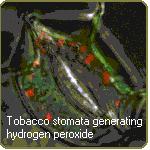 Plants in nature are continuously subject to several environmental insults, including
drought, heat, cold, toxic pollution, disease, and insects. While some plants have
evolved the ability to specifically combat one or more of these stresses (as cacti
have special abilities to withstand drought), all plants have adaptive ability to
tolerate most stresses (to varying degrees.
Plants in nature are continuously subject to several environmental insults, including
drought, heat, cold, toxic pollution, disease, and insects. While some plants have
evolved the ability to specifically combat one or more of these stresses (as cacti
have special abilities to withstand drought), all plants have adaptive ability to
tolerate most stresses (to varying degrees.
My research focuses on the roles of metal ions, strong oxidants, and antioxidants in plant stress responses. Students working on this project may have the opportunity to learn several different laboratory techniques including: greenhouse maintenance of unique plants, fieldwork, measurements of photosynthesis and transpiration, and chemical spectroscopy.
STEM Education Research
Students learn a lot by doing research projects, and we expect a lot from them. However, what students gain from those experiences in a class is less clear. I am studying how well students accept and internalize learning in course-based research experiences, and what they feel they gain from such experiences.
Matthew Siderhurst
Development of Improved Attractants for Invasive and Agriculturally Important Insect Pests
Chemical signals are among the most used information transfer sources in ecology and they can include pheromones (conspecific signaling), plant-herbivore interactions, and predator-prey interactions. While many of these chemical signals are of basic scientific interest, they are also increasingly important to developing ecologically rational pest control strategies, both as replacements for pesticides against established pests and to help mitigate the increasing threat of invasive species. Currently I am involved in several collaborative projects to develop lures for pest insects including projects on tephritid fruit flies (in collaboration with researchers at Macquarie University and DAF in Australia and the USDA in Hawaii), the little fire ant (USDA/Hawaii), and several beetle (UOG/Guam and USDA/Hawaii) and moth species (USDA/APHIS/Hawaii).
Synthesis of Small Organic Molecules Related to Insect Chemical Ecology
Many semiochemicals that mediate ecological interactions (e.g., pheromones and secondary plant compounds) are not commercially available. Often insect semiochemicals are compounds with low molecular weights and few stereocenters, making them attractive and reasonable targets for undergraduate research. Relatively short syntheses of this type can provide students with experience in synthetic design and exposure to a wider range of organic reactions while also making compounds available for further research. A recent example of this kind of research is the synthesis of volatile esters found in the noni fruit. This project involved eleven second-semester organic students and laid the foundation for an ongoing project aimed at identifying how noni volatiles change with ripening.
Ecology of Invasive Species Studied Through Radio Tracking or Trapping
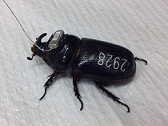 Tracking and monitoring pest insects in the environment is important both for understanding
the ecology of these insects and for controlling them. One insect I am currently working
on is the coconut rhinoceros beetle (CRB), which is a pest throughout parts of both the Pacific and Asia. Along with two students,
Diego Barahona (environmental science, 2017) and Katherine Lehman (biology, 2018),
and with collaborators from the University of Guam, I recently conducted a pilot project
to evaluate the concept of using radio tagged CRB to detect cryptic breeding sites, a technique we hope will eventually be useful in
eradication efforts. During this study we were able to follow 19 beetles at two locations
in Guam.
Tracking and monitoring pest insects in the environment is important both for understanding
the ecology of these insects and for controlling them. One insect I am currently working
on is the coconut rhinoceros beetle (CRB), which is a pest throughout parts of both the Pacific and Asia. Along with two students,
Diego Barahona (environmental science, 2017) and Katherine Lehman (biology, 2018),
and with collaborators from the University of Guam, I recently conducted a pilot project
to evaluate the concept of using radio tagged CRB to detect cryptic breeding sites, a technique we hope will eventually be useful in
eradication efforts. During this study we were able to follow 19 beetles at two locations
in Guam.
Investigating the Odor Profiles of Tropical Agricultural Products
Odors are important components of the way we taste and experience our food. In order to better understand the role volatiles play in food quality, I am involved in two projects aimed at identifying and quantifying odors in tropical crops in collaboration with USDA researchers in Hawaii. The first project involves the noni fruit, Morinda citrifolia. Sam Miller (biology, 2017) and I are looking at how noni volatiles change with ripening. A second ongoing project involves the identification of odors produced by damage to coffee.